
Why Breakfast Is Harder Than It Looks

Breakfast has a funny reputation in the restaurant world. From the outside looking in, it seems simple. Eggs. Bacon. Toast. Pancakes. Waffles. I've spent nearly my entire life around breakfast, and I can tell you there is nothing simple about executing it well.
I remember being a kid in my family's diners and watching the cooks work the grill in complete awe. They'd have eggs cooking one way over here, pancakes on another part of the grill, bacon going, potatoes crisping, toast popping up, and tickets hanging everywhere. Somehow, they knew exactly what needed to move, what needed another minute, and what needed to come off the grill right now. I remember thinking, how are they doing so much at once?
Years later, I understand exactly what I was watching.
A great breakfast cook isn't just cooking food. They're managing dozens of different clocks at the same time. And when an entire breakfast kitchen is doing it well, it almost looks easy.
Trust me, it's not.
Welcome to the Line
The Johnny D's menu is extensive, and on a busy morning there are a lot of moving pieces behind those kitchen doors.

On a busy day, our line is typically run by a team of five cooks, each responsible for a different station. We have the egg grill, the meat and home fries grill, the omelet grill, the pancake and fryer station, and, of course, the waffle station. But one of the most important positions isn't necessarily a station at all, it's the ticket caller.
The ticket caller is essentially controlling the flow of the entire kitchen. As orders come in, they're organizing the tickets, calling out what needs to be cooked, watching the timing of each station, and making sure all the components of an order come together at the same time.

They're also not just standing there yelling orders. They may drop something themselves, pull food off a grill to finish a plate, or jump in to help a cook who has fallen behind. They must be organized, think quickly, multitask, and constantly understand what's happening around them. A strong ticket caller can be the difference between a chaotic service and a smooth one.
When they're really in their zone, it's amazing to watch. The kitchen looks organized. Everyone appears calm. Ticket times are moving quickly, and what you hear is a group of people communicating and working together rather than a bunch of individual cooks working separate stations.
There are days when we're working with four people instead of five, and that's when teamwork becomes even more important. One of my favorite setups when we're down a cook is to leave the omelet station "unattended." The three other stations will shift down as needed, working together, to push the omelets out while still maintaining their own stations. Everyone carries a little more weight.

On the other side of the window, the expo and the food runner become part of that same rhythm. Expo works with the ticket caller, organizes dishes, finishes and garnishes plates, catches anything that may be missing, and helps control what leaves the kitchen and when.
The runner handles the food, works the toast, and waits for that beautiful sound every restaurant employee knows:

RUNNERRRRRRRR!
Usually coming from expo when food has been sitting there approximately four seconds.
And Then There Are the Eggs
Egg preparation demands respect.
Eggs might be the most demanding ingredient in a breakfast kitchen. Not because they're particularly difficult to cook, but because apparently humanity looked at one ingredient and decided we needed 147 different ways to order it.
Sunny side up. Over easy. Over medium. Over hard. Scrambled soft. Scrambled hard. Poached. Basted. Fried. Just to name a few.
And that's before somebody starts getting creative.
At any given time, our egg grill can be completely covered with eggs being prepared different ways. Every preparation has a different cook time. They all need to be cooked properly, they all need to be ready when the rest of their order is ready, and then every one of those eggs needs to land on the correct plate sitting in the window.
An egg cook may be looking at a grill full of eggs while simultaneously remembering which two are over medium, which three are scrambled, which yolks can't break, and exactly where all of them belong. This station is also responsible for our scrambled skillets and seafood omelets. That station requires far more skill than I think breakfast cooks are often given credit for.

Then add in modifications. Modifications can absolutely put additional strain on a line, but they're also part of this business. We have some rules, but for the most part, we try to meet our guests where they are and accommodate modifications whenever we reasonably can.
That means the kitchen isn't simply memorizing how every dish on our menu is prepared. They're also constantly processing how this guest wants that dish prepared. It's another layer of information being communicated through a kitchen that's already moving very quickly.
When the Waffles Take Over
You can't exactly call yourself Johnny D's Waffles & Benedicts and not take your waffle situation seriously.
Our waffle station has four to five waffle irons, multiple batters, and all the toppings needed to finish each waffle. A waffle takes roughly two to three minutes to cook.

Most of the time, everything moves exactly as it should. Occasionally, though, the waffle station falls behind. And in my opinion, that's one of the worst things that can happen to the flow of the line.
Maybe a few waffles stick and must be remade. Maybe an unusual number of waffle orders hit the kitchen at the same time and that station never really stood a chance from the beginning.
Now you have a decision to make: Do you hold every ticket that has a waffle on it and run longer ticket times? Or risk the rest of the food getting cold? Or do you send part of an order without the waffle? Neither option is great in my opinion, because neither feels like the experience we’re trying to deliver.
When that happens, there's only one way out of it: through. Stay focused and keep dropping waffles. That's it. You keep going until you've caught up. The tickets will take a break eventually. They always do.
Breakfast Doesn't Get Better Sitting in a Window
One of the biggest challenges in breakfast isn't simply cooking everything correctly. It's getting everything ready at the same time. I don't like food sitting in our window for more than a minute or two. After that, it starts to die.
Eggs change. Toast cools. Potatoes lose their crispness. Sauces sit. Something that looked beautiful when it came off the grill starts becoming something I don't want to serve.
So sometimes we must make a judgment call. If one item is running behind but I know it's going to follow the rest of the table's food within another 60 to 90 seconds, I'm usually comfortable sending the finished plates. I'd rather have you eating your breakfast while it's hot than sacrifice the quality of everyone's food just so every plate touches the table at the same second. Also, that 60-90 seconds gives grace since, realistically, a food runner may not be able to carry ten plates out to a table at once anyway.
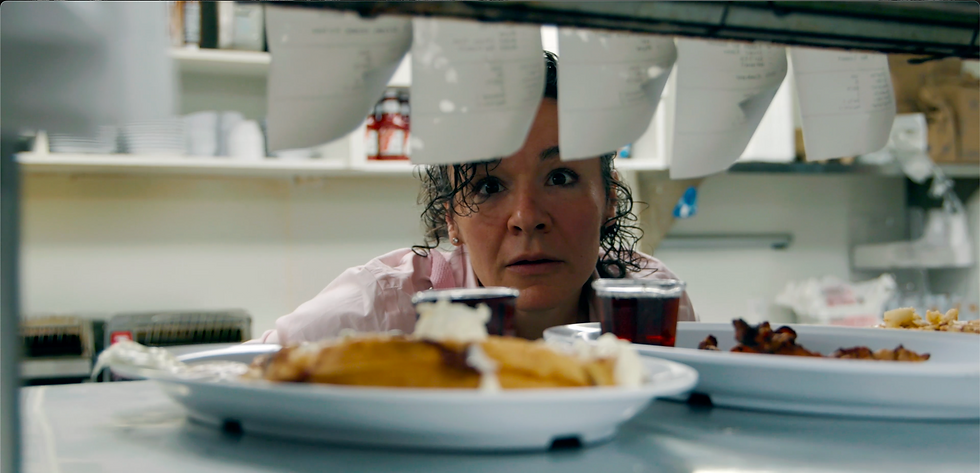
If it's going to be longer than that, I will normally ask a manager to visit the table or go out there myself. And we'll simply tell you the truth. Something is running behind. Your food is a priority. We're working on it.
The same thing happens if something isn't prepared to our standards and needs to be remade. I'd much rather tell a guest, "We weren't happy with the way this came out, so we're making you another one," than rush something through the window that we know isn't right. I've found that guests are incredibly understanding when you communicate with them. Most people would much rather wait another few minutes for food that's prepared properly than receive something rushed or subpar.
Sometimes good hospitality isn't pretending everything went perfectly. It's how you handle things when it didn't.
My Favorite Seat in the House
After all these years, I still jump on the cooking line when my crew needs me. Normally I jump on the line during the week when we're running leaner shifts and people have days off.
On busy weekends, you'll most often find me at the expo window. And honestly, that's probably where I'm most comfortable.

Expo is right in the middle of everything. I'm organizing tickets, finishing plates, watching what's coming through the window, communicating with the kitchen, helping run food and, at our Myrtle Beach location, sometimes running the waffle station at the same time. It's busy enough to keep my ADHD brain very happy. Give me five things happening simultaneously and apparently that's when I become the most focused.
But there's another reason I love that position. It's really where I started. All these years later, I can still stand at that window during a busy service and watch the entire operation moving around me. The ticket caller is calling. The grills are full. Waffles are cooking. Plates are hitting the window. Servers are moving through the dining room. Someone (usually me) is inevitably yelling for a runner.

And when we make it through one of those services, I still look at our team and think:
We are so amazing. Every single time.
Our teams across all three Johnny D's locations carry an incredible amount of weight in those kitchens. Our menu isn't easy. There are a lot of options, a lot of preparations, and standards that must be maintained regardless of how many tickets are hanging. When they're doing their jobs well, you shouldn't see most of that.
You should just see breakfast.
Maybe That's the Point
For all the chaos that can happen behind the scenes, breakfast itself is one of the simplest pleasures I know. Maybe that's part of why I've always loved it so much. All too often, breakfast gets skipped, rushed, eaten in the car, or blended into something we can drink while we're running out the door.

So, on the rare morning when I get to sit down, uninterrupted, and enjoy a good breakfast, preferably with a good iced latte, I appreciate it. There's something special about starting your day that way.
And maybe that's why all that organized chaos happening behind the kitchen doors is worth it.
While you're sitting at the table enjoying your eggs, waffles, coffee, or whatever your favorite breakfast happens to be, there's a team on the other side of that wall working together to make something that looks incredibly simple happen.
When we do it right, you may never realize just how difficult it was.
And I think that's exactly how it should be.
Thank you for taking a few minutes to step behind the scenes with me and see what it takes to get breakfast from our kitchen to your table.
From my kitchen to your table, I can't wait to welcome you.
— Chef Jamie


Comments